
Ayahuasca: what it is, origin, preparation and effects of the sacred medicine
From ancestral tradition to science, a journey through the sacred medicine of the Amazon

31 min read
2.1Short Story: The Day Outside of Time
A long time ago, when the rain still wet the skin and the sun warmed the hair, two Shamans from different tribes met to consecrate a new mystery of nature.
One had descended into the depths of the Amazon and brought back a magic leaf that smelled of wet earth and whispered when the wind passed. The other had climbed so high into the canopy that his feet forgot the ground: from there he brought a sacred vine that coiled like a sleeping snake and pulsed like a living heart.
They sought each other because the Mother had cast upon their clans a challenge that neither could carry alone.
The tribe of the ground was suffering an epidemic of nightmares. Every night when they closed their eyes, they saw meteors tearing across the sky in flames - they woke with anguished chests and fear was present in every step they took during their days. A child stopped sleeping. An elder wept before nightfall. Day became refuge and night became enemy.
The tribe of the sky had woken up allergic to the green world. Their skin burned at the touch of any leaf. Their lungs burned with the very air of the forest. When their feet touched the ground, they lost all balance of the heart. As if the ground rejected them, as if nature had forgotten their names - they lived suspended between sky and earth, belonging to neither.
So the two healers ordered a house built on the water, in the middle of the river that divided each tribe's territory, where no law held and no bird landed without permission. It was a place that belonged neither to the ground, nor to the sky, nor to time. It belonged only to that encounter and to the creation of a new herbal vaccine.
When they entered that house, day turned to night. The forest fell silent. All the animals, all the men and all the plants watched from afar, for they knew that something was being born on that day outside of time.
Inside, the two Shamans did not speak the same tongue but breathed the same calling. The sacred vine, found at the height of the heavens, demanded the brute force of the earth, the roar of the lungs, the tremor of the hands, the stone axe that split the root. The magic leaves asked for the opposite, the lightness, the breath, the hand that touches without weight. For hours that stretched into weeks within a single day, the two sat in silence, backs turned to each other, inhabiting the other's knowledge - where learning the other was the only way to become whole.
Breaths, bubbles, crackling firewood, drumbeats and earthquakes could be heard inside the house on the water until at last the work was done and the two Shamans opened a new portal - turning the longest of nights into a dawn of pure adoration.
What they carried in their hands had no name yet. It was vine and leaf, sky and ground, strength and delicacy fermented in the same pot. A herbal vaccine, not against a bacterium or a virus, but against forgetting: the forgetting that man belongs to the earth, that the sky is not distant, that fear can be crossed. It was the medicine that the Mother had hidden so it could only be found when two opposites agreed to sit together on the water.
They gave it to the child who had stopped sleeping. They gave it to the elder who wept before nightfall. They gave it to those who burned at the touch of the earth.
And the forest, which had been silent for weeks, began to sing again.
What was born on that river, on that day outside the calendar, still carries the name that the water chose.
AyahuascaAyahuasca: Ayahuasca is an ancestral Amazonian psychoactive brew prepared through the decoction of Banisteriopsis caapi vine and Psychotria viridis leaves..
2.2Introduction
In this article, Agency Brasil presents a comprehensive guide to the main questions behind the culture of AyahuascaAyahuasca: Ayahuasca is an ancestral Amazonian psychoactive brew prepared through the decoction of Banisteriopsis caapi vine and Psychotria viridis leaves., exploring from the historical roots of the beverage to the secrets of its preparation, the biopsychosocial effects on the body, the current scientific debate on the subject, and the details of ritual practice that we gathered through field research.
Ayahuasca originates from the Amazon, the richest biome in South America and the environment with the greatest biodiversity on the planet: it harbors roughly 10% of all living species on Earth, holds the largest volume of surface freshwater in the world, gathers more than 390 billion trees of approximately 16,000 different species, shelters between 5,000 and 10,000 plants with pharmaceutical potential, and still guards more than 100 Indigenous peoples who have never had contact with non-Indigenous society. 1
It was in this singular environment that the original Latin American peoples found an entheogenEntheogen: An entheogen is a psychoactive substance used in sacred, religious, or spiritual rituals to induce divine or transcendent experiences. capable of teaching about the origin of life, sheltering the soul, and blessing the human body with a true renewal of the self and with the pursuit of a deep meaning of existence. Studying Ayahuasca is the first step toward understanding its impact on the history of the Latin American people, its relationship with the ancestry of our continent, and above all, the historical-cultural-spiritual importance it has assumed for the Brazilian nation.
2.3What is Ayahuasca?
Etymologically, the term Ayahuasca originates from the Andean Quechua dialect, formed by the expressions aya (souls or spirits) and huasca (vine), which can be translated as "vine of the souls" or "vine of the spirits" - a name that coexists with countless other regional names, such as natema, yagé, caapi, nixi pae, daime and vegetal, which vary according to cultural, geographic and religious context. It has been used for centuries by Amerindian peoples of the Amazon in countries such as Peru, Colombia, Bolivia, Ecuador and Brazil. The beverage reached Brazilian urban centers in the early twentieth century, during the rubber boom, giving rise to the first ayahuascaAyahuasca: Ayahuasca is an ancestral Amazonian psychoactive brew prepared through the decoction of Banisteriopsis caapi vine and Psychotria viridis leaves. religions, among them Santo DaimeSanto Daime: Santo Daime is a Brazilian syncretic religion founded in the 1930s in the state of Acre by Mestre Raimundo Irineu Serra., founded by Raimundo Irineu SerraRaimundo Irineu Serra: Raimundo Irineu Serra, known as Mestre Irineu, was the Brazilian religious leader who founded the Santo Daime, a religion born in Acre that uses ayahuasca as its sacrament. Research.2, an edition about ayahuasca published only in Portuguese, presents him as the founder of the doctrine and tells the story of his initiation in the forest. in Rio Branco, Acre. 2
Ayahuasca is considered an entheogenEntheogen: An entheogen is a psychoactive substance used in sacred, religious, or spiritual rituals to induce divine or transcendent experiences., a term that originates from the Greek, entheos ("God within") and gen ("to become"), referring to that which "generates the divine internally." It is prepared from the decoction of the vine Banisteriopsis caapi, the jagube - and of the leaves of the shrub Psychotria viridis, the chacrona. The leaf releases DMT, which is the active principle of the tea. The vine releases β-carbolines such as harmine, harmaline and tetrahydroharmine, which inhibit the MAO-A enzyme in the gastrointestinal tract, which degrades the DMT present in the leaves. The mixture causes the DMT to last longer in the body and enables its arrival at the brain, where it acts on serotonergic receptors (5-HT2A), producing altered states of consciousness linked to emotional processing and introspection.
It is, therefore, a synergistic and inseparable combination, because without the β-carbolines from the jagube, the DMT from the chacrona would be degraded before exerting any effect. This biochemical interdependence reflects, at the molecular level, the same logic of integration that characterizes the ritual use of the beverage: the experience with Ayahuasca cannot be reduced to its chemistry, being inseparable from the context, the intention and the symbolic structure in which it is consumed.
The beverage holds a singular status among power plants and explains its expansion beyond Amazonian borders, consolidating it as one of the most studied and debated ethnopharmacological phenomena of the present day. 3
2.4Origin and History
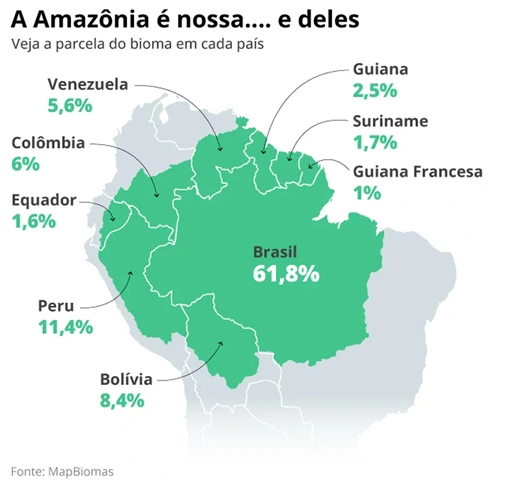
To understand the origin of AyahuascaAyahuasca: Ayahuasca is an ancestral Amazonian psychoactive brew prepared through the decoction of Banisteriopsis caapi vine and Psychotria viridis leaves., it is essential to grasp the territorial dimension of the Brazilian Amazon rainforest, which shares territory with 8 other countries: Peru, Bolivia, Colombia, Venezuela, Guyana, Suriname, Ecuador and French Guiana. This vast cohabitation of different native origins in a single biome gave rise to different interactions with all the richness of fauna and flora, reflecting the cultural and spiritual diversity of each people.
Although there is no scientific consensus on which tribe originated the first interaction with Ayahuasca, it is known that this sacramental use dates back to prehistory, occurring since 2,000 Before the Common Era (BCE, or BC). More than 72 Indigenous tribes of diverse ethnicities were identified as precursors of its use 4, however, the first documented accounts date to the eighteenth century, when Jesuit missionaries had a first contact with the use of the beverage in the Napo River region, which lies today between Peru and Ecuador. 5
In a study published by the Brazilian anthropologist Pedro Luz, the use of Banisteriopsis caapi (the central vine in the composition of Ayahuasca) is highlighted as a pan-Amazonian cultural phenomenon, that is, one that spans the entire Amazon. The anthropologist's article covers three major linguistic families that consecrated with the vine: Pano, Aruak and Tukano, which were distributed across the Amazonian territories in Acre, Peru, Bolivia, Central Amazonia, Upper Rio Negro, Colombia and Ecuador. This relationship of the original peoples of the Amazon with the jagube vine shows us how Ayahuasca has an intimate origin with South America, a medicine born from a specific biome and from a plant that exists nowhere else in the world.
The author points out that peoples with completely distinct languages, living in different regions of the Amazon, arrived at the same symbolic conclusions about the vine and its use:
- Everyday reality is limited and illusory
- There is an "other side" that is more real, inhabited by spirits
- The plant is the vehicle for accessing that other side
- The visions hold the absolute status of truth, not of hallucination
- The beverage is linked to the afterlife destiny and to immortality
- The shaman is the qualified mediator of this experience
- The plant has a pedagogical and therapeutic function
In other words, the vine is a constitutive element of the cultural and cosmological identity of these peoples, as fundamental as fire or language. For the Makuna of the Tukano linguistic family, in fact, human culture only arose when men received the vine. 6 It seems that it was not man who gave meaning to the plant, but the plant that gave meaning to ancestral Amazonian man. It is as if it were part of an unconscious that inhabited the forests and was absorbed by the peoples who found the plant.
Various preparations were made: some with the vine alone, others with varied additives. Thus, Banisteriopsis caapi was always the central axis in the medicinal practice originating from the Amazon basin, while the leaves varied among different species. Eventually, chacrona became established as the most popular combination with the vine, and this is the formula that Santo Daime and other Brazilian traditions would go on to spread.
2.4.1The Expansion of the Medicine Through Santo Daime
In mid-1930, a new, entirely Brazilian religion known as Santo Daime was born in the interior of the Amazon, in Acre. Its founder was Mestre Raimundo Irineu SerraRaimundo Irineu Serra: Raimundo Irineu Serra, known as Mestre Irineu, was the Brazilian religious leader who founded the Santo Daime, a religion born in Acre that uses ayahuasca as its sacrament. Research.2, an edition about ayahuasca published only in Portuguese, presents him as the founder of the doctrine and tells the story of his initiation in the forest., a rubber tapper born in Maranhão - he would go on to become one of the most important spiritual leaders of the nation. He had migrated to Acre during the rubber boom, a period of great economic expansion and territorial disruption in the Amazon region, a period that had arrived with many changes.
According to the anthropologist Monteiro da Silva, the birth of Santo Daime was a natural response to the crisis that the Amazonian population experienced in that period. The industrialization of the region not only exploited its resources but also invalidated it culturally, destroying symbolic references and threatening the tradition of those peoples. After having their social and cultural relations radically transformed, the need arose to rebuild the ancestral bond that gave meaning to their existence. As a remedy against the crisis that modernity had generated, new creeds were consolidated that safeguarded local tradition and the medicine of the forest as their heart. 7
The impact of this symbolic resistance was so concrete that, five decades later, CONFEN, the Federal Narcotics Council, found that followers of these doctrines were more respectful of the law and reported calmer and happier lives than the average population. This conclusion was decisive: in 1987, the religious use of Ayahuasca was officially recognized by the Brazilian State. 8
This institutional legitimacy, however, had much older roots, and a very specific face. Before founding Santo Daime, between 1913 and 1915, Raimundo Irineu moved to Brasiléia on the border with Bolivia, where he was looking for his fellow countrymen who had also migrated to Acre during the rubber boom - brothers André and Antônio CostaAntônio Costa: Antônio Costa is a figure in the origin story of Santo Daime as told in Research.2 of the Agency editorial, an edition published only in Portuguese. The edition presents him as a countryman of Raimundo Irineu Serra who had migrated to Acre during the rubber cycle, and as the person who introduced Irineu to the Peruvian rubber tappers through whom he first met Ayahuasca.. Irineu was able to find his colleagues, but it was only some years later, around 1918, that Irineu had his first contact with Ayahuasca in the forests of Peru through Peruvian rubber tappers introduced by Antônio Costa. 9
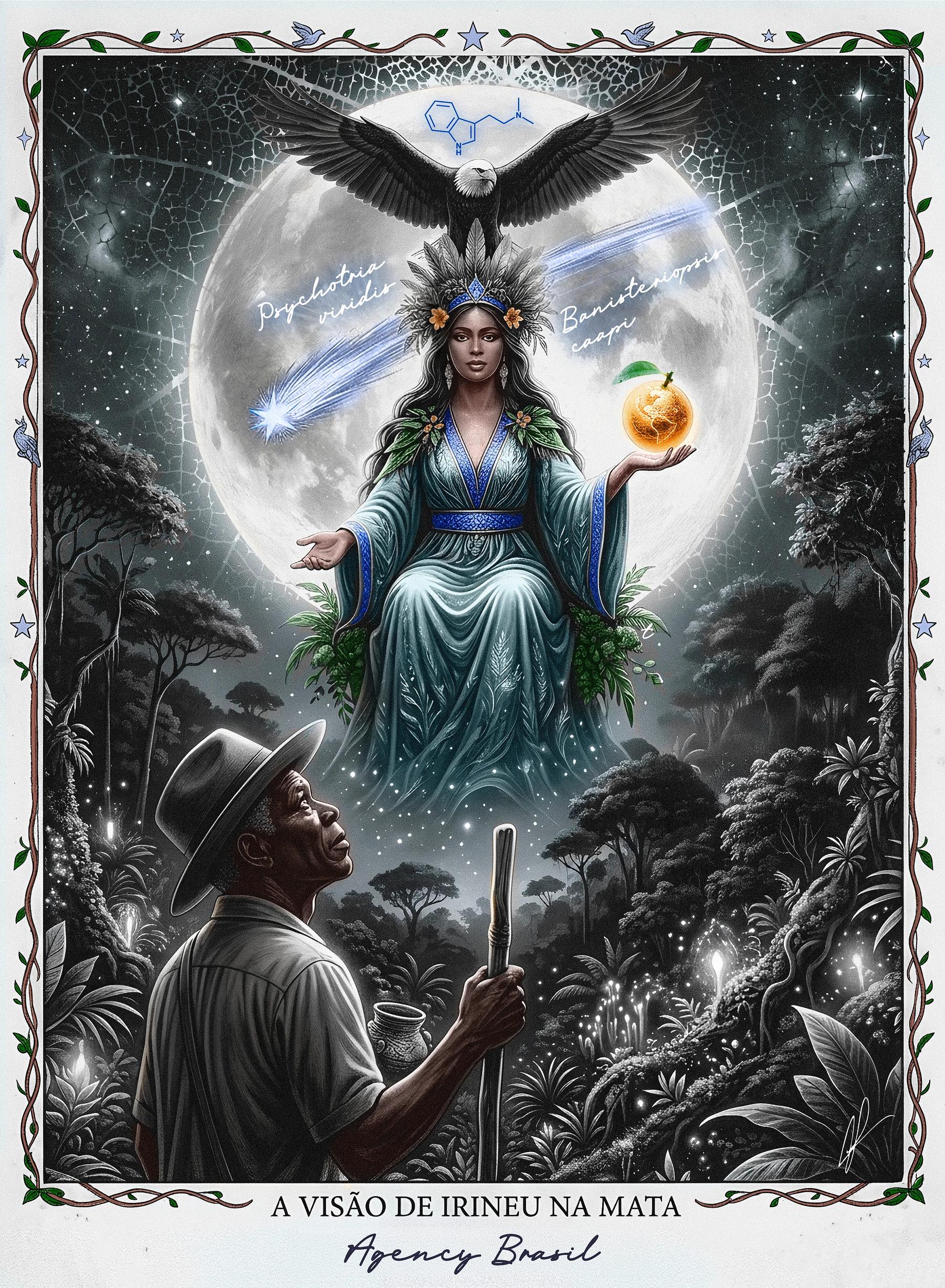
Artistic depiction of the founding vision of Santo Daime: Irineu Serra receives from the Virgin of the Conception, the Queen of the Forest, the revelation that would give rise to the doctrine — Illustration made with Generative AI © Agency Brasil. Offered with human and computational gratitude to the force of the forest.
There are many accounts from this period of the genesis of Santo Daime, however, a general synthesis based on the accounts of the biography "Eu venho de longe: Mestre Irineu e seus companheiros" shows that Irineu and Antônio had learned of an ancestral beverage called "aoasca" that was consumed by caboclos in the Peruvian rubber plantations, and together, they traveled to that region.
Irineu's first experiences with the sacred medicine were marked by a Christian prejudice that he himself held. He had heard accounts that it was a beverage consumed in rituals that invoked demons, but during a brief contact with the force of his first consecration, he was surprised by inspiring visions of crosses, leading him to question the true nature of that beverage.
He drank the beverage on two other occasions, but felt no effect at all and nearly gave up on that spiritual investigation that was calling to him until, in later sessions, with a medicine prepared by Irineu and Antônio Costa themselves, a truly profound experience of the force was consecrated between them.
A feminine entity manifested first to Antônio, then directly to Irineu, who had the vision of this sacred feminine sitting on a throne inside the moon. She revealed herself as a spiritual guide who had accompanied him since his birth in Maranhão, in northeastern Brazil. She challenged and questioned his prejudices about the beverage and summoned him to a mission of deep self-knowledge.
To receive her instructions, Irineu needed to isolate himself in the forest in a rite of initiation that he had felt in his heart. During eight days of pilgrimage in the heart of the Amazon and with no contact with anyone, he fed only on bland cassava and the sacred medicine he had brought with him. From the fourth day on, he was so immersed in the force that he no longer needed to consume the medicine and his visions naturally deepened. On the eighth day the feminine entity revealed herself under the name Clara as the Virgin of the Conception, the Queen of the Forest, handing him an orange - symbolizing the world and transferring to him the mission that Antônio Costa had refused.
At the end of his initiation, now under the full guidance of the Queen, Irineu – from then on "Mestre Irineu" – began to rename everything he had just discovered. The "aoasca" became "daime," the "mariri" (vine) became "jagube" and the "chacrona" became "rainha." At that moment, in the interior of the Amazon rainforest, a new doctrine and a new spiritual leader were born, entirely Brazilian - Christian in their foundation, Amazonian in their essence. 10
In that period of spiritual immersion, Mestre Irineu had come into contact with an entity that alchemists and mystics of medieval Europe had dedicated an entire lifetime of study to comprehend. Guide, instructor, bearer of mission: the Virgin of the Conception revealed herself to him as the purest manifestation of Sophia, the feminine principle of sacred knowledge in Gnostic and alchemical traditions, who leads the initiate through darkness to light.
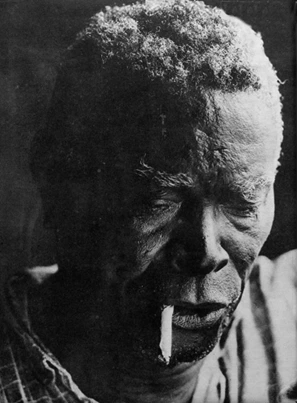
Mestre Raimundo Irineu Serra, 1968. Photo: Carlos Marques / Revista Manchete. Via Chacruna Institute.
According to the article "A teologia do Santo Daime na perspectiva de uma teologia pública" by Amanda VicentiniAmanda Vicentini: Amanda Vicentini is the author of a work on the theology of Santo Daime cited in Research.2 of the Agency editorial, an edition published only in Portuguese. The edition names her in the text as its source for the founding of the Santo Daime doctrine through the center created by Mestre Irineu, and lists the work in its references as a master's dissertation in Theology., what followed was the founding of the Santo Daime doctrine through the Centro de Iluminação Cristã Luz Universal Alto Santo (CICLU - ALTO SANTO) in Brasiléia, Acre - founded by Mestre Irineu. The center was responsible for structuring the doctrine in a way that brought ever more purpose and comfort to the increasingly difficult daily life of the population in the region, helping to structure a new sense of reality for its members. 11 The center is considered to have effectively begun in the 1920s/1930s when it started gathering its first followers, but the legal consolidation was completed only in the early 1940s.
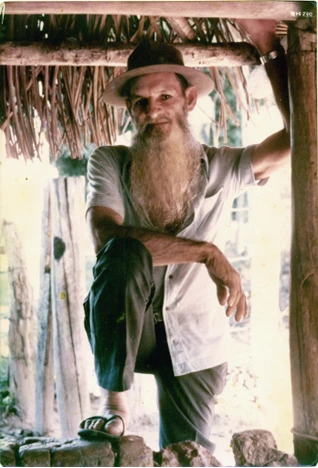
Padrinho Sebastião Mota de Melo at Rio do Ouro, Amazonas, 1982. Source: Centro de Documentação e Memória — ICEFLU.
After the passing of Mestre Irineu in 1971, Sebastião Mota de MeloSebastião Mota de Melo: Sebastião Mota de Melo, known as Padrinho Sebastião, was a Brazilian religious leader of the Santo Daime. Research.2, an edition about ayahuasca published only in Portuguese, names him in one paragraph and one photograph caption: after the death of Mestre Irineu in 1971 he carried the teachings forward and founded the centre known as CEFLURIS., known as Padrinho Sebastião, received the revelation to carry Mestre Irineu's teachings forward and founded the Centro Eclético de Fluente Luz Universal Raimundo Irineu Serra (CEFLURIS) in Vila Céu do Mapiá, in the state of Amazonas - which became the most important Daime center and was responsible for breaking regional and national barriers, expanding the doctrine, its principles and its values across Brazil and beyond. 11
After Mestre Irineu's revelations, Ayahuasca left the shamanic context and organized itself as a structured doctrine with rituals and hierarchy, with syncretism between shamanism, popular Catholicism and spiritism. Following this evolution, the Santo Daime tradition branched into new currents such as Barquinha, which combines elements of Christian charity with the liturgy of Umbanda, and the União do Vegetal (UDV), which integrates reincarnationist Christianity, prioritizing intellectual clarity and the ethical improvement of the individual.
2.4.2Ayahuasca traditions beyond Daime
As we can see in this rich history of Ayahuasca, the beverage constitutes the cultural matrix of different traditions. Up to this point, we have seen that it emerged as shamanism and Indigenous mystery in a period so remote that it is impossible to define. Then came the Daime cycle, constituting a "border" shamanism, also known as vegetalismo.
From the 1980s onward, especially after the regulatory milestone that legalized Ayahuasca in 1987, "urban shamanism" emerged, marking the era of the globalization of the medicine. In this current period, Ayahuasca crosses the borders of the forest to become a tool for self-knowledge, therapy and scientific research in the metropolises. This is done through universalist institutes, adapting ancestral rites to the needs and languages of contemporary life.
2.5Preparation
Many of the known methods for preparing Ayahuasca are still rustic and artisanal and involve intense manual labor. The manufacturing process, called feitio, also integrates a ritualistic and sacred treatment that seeks to handle the plants with care and respect - initiating a symbolic safeguard with the beverage that reaches the seeker at the moment of consumption.
Although the original preparations in the Amazon involved different combinations of plants with the vine, in the established ayahuasca religions, the active substrate is always the chacrona leaf, not only due to legal and doctrinal requirements, but also for reasons of predictability and safety in the results of the formulation.
Most of the raw material still comes from the Amazon and is transported to the different regions of Brazil where the tradition continues. After the raw material is collected from different sources, a process of selection and cleaning of the material begins, in which the chacrona leaves are separated from stems, dry leaves, twigs, fungi or any other undesirable material. This stage, known as the "cleaning of the queen," involves ensuring that the leaves used in the process do not carry any type of toxicity or chemical property other than those present in the composition of the healthy leaves.
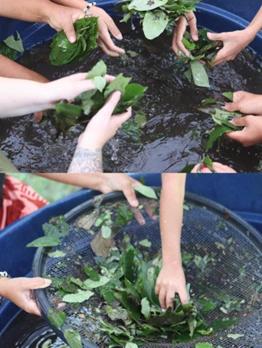
Photographs ofthe cleaning and filtering process of the chacrona leaf. The aim is to remove impurities from the plant with water and a sieve to ensure the best quality of raw material at the time of cooking with the vine. © Agency Brasil and Instituto Caminho da Floresta.
The selection of the vine also involves a cleaning process in which impurities are removed from the surface of the stem in order to remove dirt and other debris. After cleaning, the raw material is kept out of direct sunlight because the beta-carbolines of the vine are photosensitive active compounds.
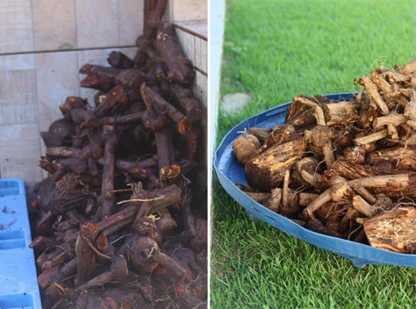
Photographs ofthe cleaning and drying process of the jagube vine. © Agency Brasil and Instituto Caminho da Floresta.
After the vine is cleaned, the material undergoes a mechanical process known as bateção to break the fibers of the stem and facilitate the extraction of active compounds during cooking. In large volumes, crushing with rural machinery can also be an option, since manual maceration is exhausting.
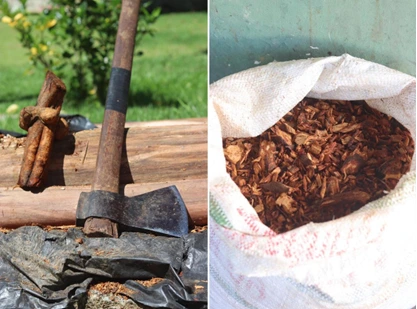
Photographs ofthe cutting process and the result of crushing the jagube vine in rural machinery. © Agency Brasil and Instituto Caminho da Floresta.
Once the raw material is properly cleaned and selected, cooking in water begins. Several passes are made with the goal of initiating a gradual extraction, where the concentration of the extract increases until reaching a ratio of 5:1 (volume of raw material in relation to the final volume of concentrated extract) in the case of Daime preparation, or 10:1 in the case of Ayahuasca preparation - the ratios may vary depending on the traditions of the feitio.
The pots are kept at a temperature close to 100°C, a range where many active compounds tend to be degraded. However, DMT and carbolines are stable at this temperature and remain in the tea. The pots need to be constantly stirred during the concentration phase of the tea so that the bottom does not heat to higher temperatures as the broth becomes viscous.
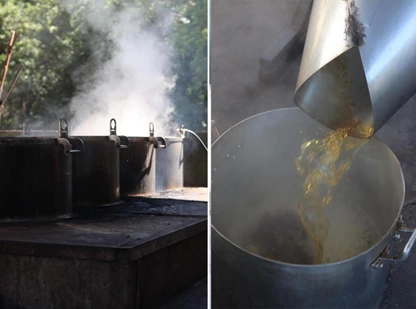
Photographs ofthe Ayahuasca feitio process. © Agency Brasil and Instituto Caminho da Floresta.
The high temperatures require great care in handling the equipment and the material, and furthermore, the cleaning of the space and the utensils is a fundamental part of the preparation ritual, ensuring not only respect for tradition, but also the final quality of the extract - which beyond all the technical stages, also involves the inner state of those who participate in the process.
During the preparation of each pot, after the insertion of the vine and the chacrona, a prayer is performed among the participants to bless the cooking of the new extraction. The songs (known as hinários) play a fundamental role in the ritual and influence the entire experience, especially for participants who consecrate during the feitio.
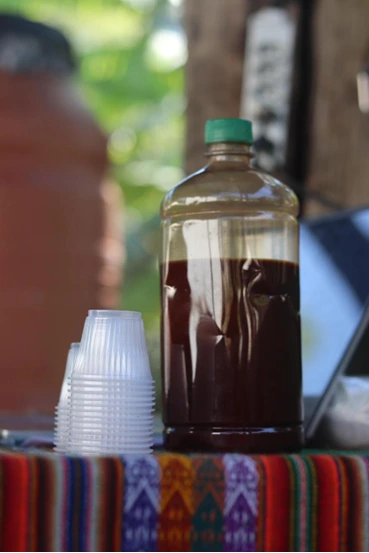
Photograph of a flask of Daime. © Agency Brasil and Instituto Caminho da Floresta.
Both in the bottling and storage processes, some final precautions are necessary. The bottles must be sealed to prevent fermentation, which decomposes some of the organic compounds. The medicine must be kept in a cool, dry place, protected from excessive heat. Proper storage not only preserves the chemical quality of the preparation, but also ensures the maturation and stabilization of the extract. Prolonged aging in this context does not pose a risk.
At the end of the feitio, a collective consecration is usually held in the same week to consummate the conclusion of this sacred process that typically lasts one or several weeks. Thus, the result of the production is blessed one last time; it will reach many people who will find in Ayahuasca, a dialogue with mother nature that began, in reality, in the very preparation of the beverage.
2.6Consecrating: Effects of Ayahuasca
The ritualistic use involves a ceremonial structure that combines symbolic, collective and individual elements, understood by practitioners as a simultaneous process of physical and spiritual healing. In this sense, the plant is conceived in the ayahuasca context not merely as a pharmacological substance, but as a "teacher" entity, bearer of language and agency, capable of translating previously unnamed emotions and pointing the seeker toward what needs to be transformed in their life. 12
In a traditional ceremony, seekers are guided through the spiritual process by an opening prayer of the session, consecrate the medicine (that is, drink the tea), and then sit down for the meditative process. The experience with Ayahuasca begins around 40 minutes after ingestion, with a peak between 60 and 120 minutes and an approximate duration of 4 hours, without loss of consciousness — only alterations in its state. Halfway through the ritual, a second optional dose is offered to seekers to maintain the force until the end of the ceremony. The ceremony also closes with a routine of prayers. After the closing, participants gather to share food and offer mutual comfort in a moment of great mental clarity and peace.
For most people, the effects of Ayahuasca are very evident during the meditative process of a ceremony. The medicine facilitates and deepens meditation and guides the seeker toward what they need to see.
The effects during the meditative phase are profoundly different among seekers because they depend on the individual context of each person. However, it is common for the psychological effects during the meditative period to combine challenging dimensions and expansive dimensions. The challenging dimensions bring confrontation with internal difficulties that may culminate in purges (such as vomiting) — which are often perceived as moments of internal purification. The challenging phases of the process are frequently experienced as moments of shock and confrontation with traumatic experiences, from which an awareness of self-destructive patterns emerges. The expansive dimensions, on the other hand, bring self-confidence, personal insights, transcendental experiences, feelings of unity. Mirações may also emerge, unique visions from altered states of consciousness. These dimensions can alternate, with moments of confrontation followed by abrupt shifts to states of peace, ecstasy and existential resignification. 12 13
The environment where Ayahuasca is used plays a major role in the outcomes of the individual process. The better guided (physically and spiritually) the context is, the greater the guarantees that a seeker's experience will be transformative and positive. Comfort and support play a fundamental role in the power of Ayahuasca. 14 That is why ceremonial and ritualistic contexts are part of the culture and the potential behind this beverage, which, like an Indigenous rite of passage, calls for a serious, structured and protected context.
However, the effects of ayahuasca transcend the meditative state that participants of a consecration experience during the use of the sacred medicine. It is very common for intense and personal transformations to occur in the period following the experience, in such a way that a person begins to see the world and life in new directions that are not only positive, but also persistent.
These changes in beliefs, opinions and intimate perspectives on existence are often accompanied by critical decisions made by participants in favor of a healthier and safer life - such as overcoming addictions, habits, cycles or harmful interpersonal relationships, in pursuit of spiritual awakening through Ayahuasca.
2.6.1Drug Interactions and Health Risks
Ayahuasca presents risks of drug interactions and psychiatric interactions in individuals with a predisposition to psychotic conditions. The seeker must inform those responsible for the ceremony of the use of any licit or illicit substances and of any medical diagnosis, especially psychiatric ones.
The interactions are due to the inhibitory action of beta-carbolines on monoamine oxidase (MAO) and on the hepatic enzymes CYP3A4 and CYP2D6. The combination with SSRIs, tricyclic antidepressants, opioids, analgesics and antimigraine medications can trigger serotonin syndrome. 13
Therefore, the prior screening of psychiatric diagnoses and the use of medications and substances is an indispensable step in the responsible conduct of any ceremony with Ayahuasca.
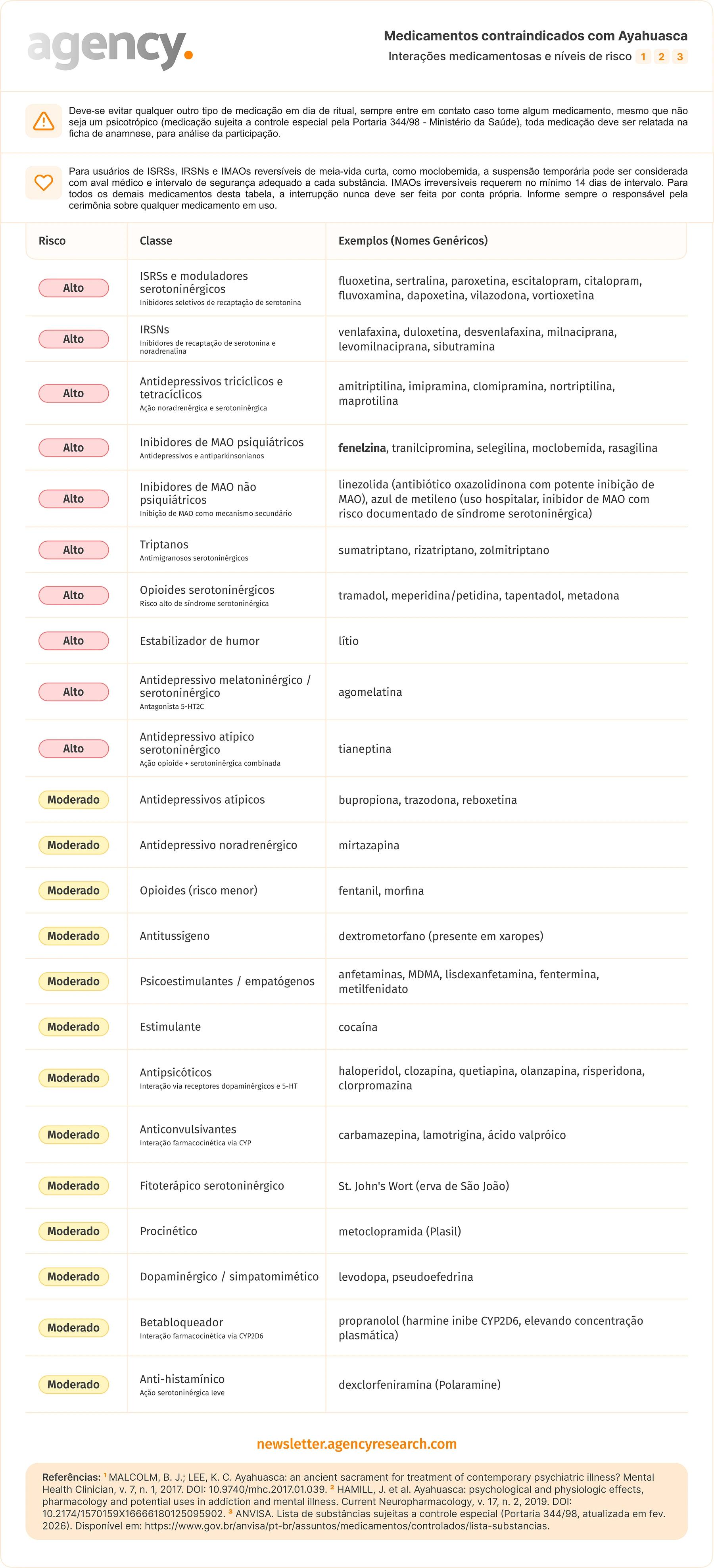
2026. INFOGRAPHIC: Medications contraindicated with Ayahuasca — Drug interactions and risk levels. Prepared by Agency Brasil based on MALCOLM; LEE, 2017; HAMILL et al., 2019 and ANVISA.
2.7Scientific Research and Therapeutic Uses
Many of the doubts that exist regarding Ayahuasca are due to a lack of understanding about its origin and its interactions with the human body, however, universities in Brazil and around the world have dedicated themselves, mainly in recent decades, to studying and better understanding the effects of this beverage considered sacred by different cultures - and increasingly, considered therapeutic by different fields of science.
According to a survey of the scientific research database Dimensions.ai, there are 19,825 publications published on Ayahuasca between the years 1921 and 2026, however, in recent years an exponential growth in scientific investigations on the subject can be identified.
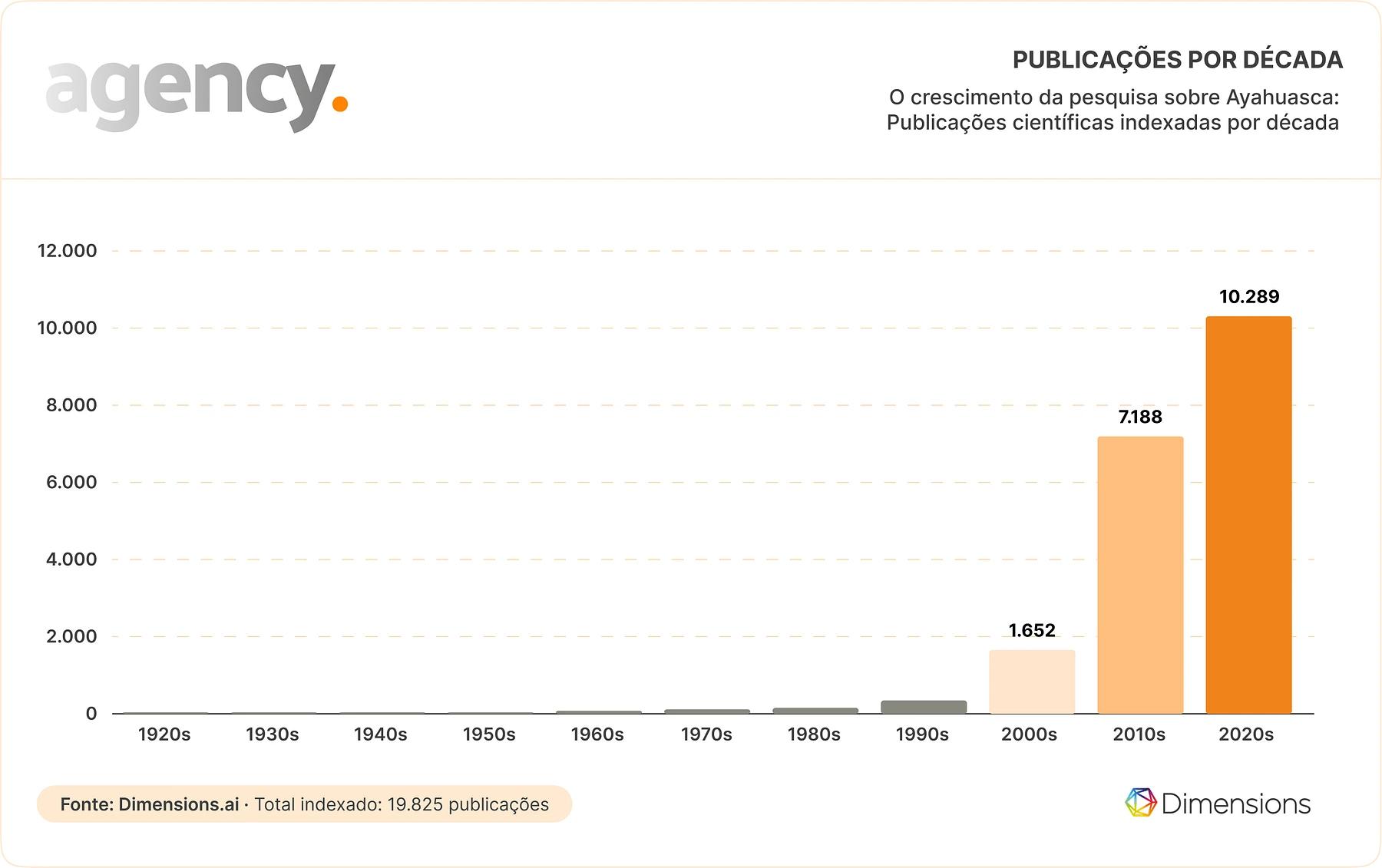
2026. INFOGRAPHIC: Publications by decade - growth of research on Ayahuasca: Scientific publications indexed by decade. Prepared by Agency Brasil with data from DIMENSIONS.AI.
Roughly 88% of all indexed scientific production on Ayahuasca was developed in the last decade and a half (2010-2026), which points to a growing interest from the scientific community in the benefits of this substance for society. The standout year was 2023 with 2,398 publications, representing nearly double the previous year and 48 times more than the number of publications in 2000, which were only 50.
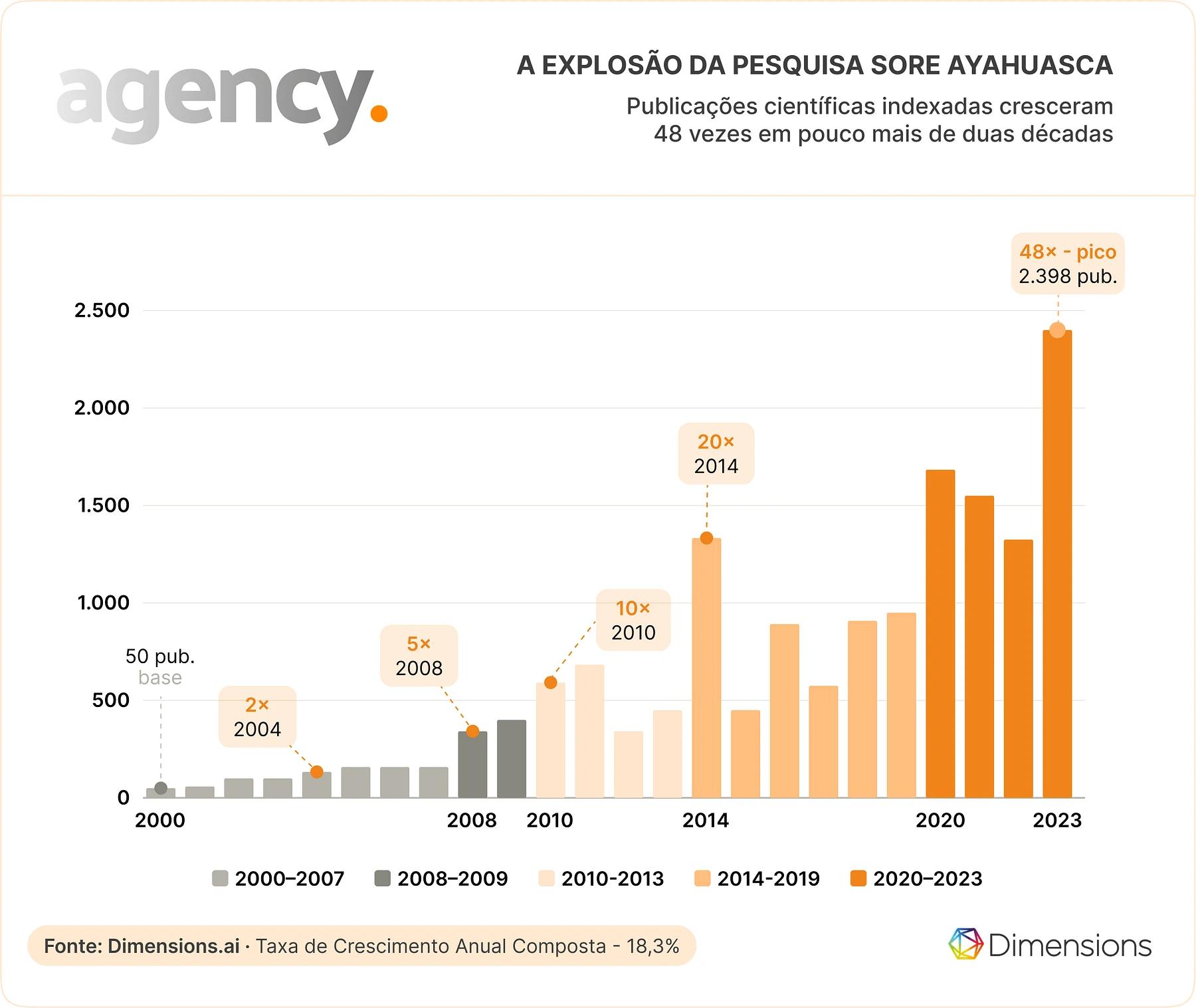
2026. INFOGRAPHIC: The explosion of research on Ayahuasca - indexed scientific publications grew 48 times in just over two decades (2000–2023). Prepared by Agency Brasil with data from DIMENSIONS.AI
The dominant research category is Biomedical and Clinical Sciences, followed by Psychology, indicating that the topic is studied predominantly as a medical and psychological object and not merely a religious, spiritual or anthropological one. 15
Much of the research focuses on the pharmacological effects of ayahuasca. It acts on a brain system called the "serotonergic" system. Serotonin is a neurotransmitter distributed in the brain and body, acting as a general regulator of the organism and directly influencing mood, sleep, appetite, sensory perception and various cognitive functions such as memory and attention. Its activity occurs through neural release and binding to specific receptors on the next neuron - like a key fitting into a lock, thus carrying out signal transmission. The serotonergic system is precisely the network formed by these neurons, receptors and communication pathways that use serotonin as a messenger, and it is in this system that ayahuasca exerts its main action, mimicking and amplifying its effects in an agonistic manner, causing alterations in perception, emotion and memory processing, and resulting in unusual states of consciousness that modify one's perspective on life and how we respond to it.
Beyond the immediate effects, ayahuasca causes long-term changes through neural plasticity - the brain's ability to reorganize itself, forming new connections and remodeling circuits related to emotion, memory and behavior. These lasting effects are expressed in improvements in emotional regulation, such as a greater ability to deal with negative emotions and a reduction in mental rumination, as well as changes in perspective on life. In contexts accompanied by psychotherapy, remission of depressive symptoms, anxiety and the resignification of traumas has also been observed, even after only a few sessions.
Emphasis is placed, however, on the importance of the therapeutic context, of the pre-ceremony preparation - known by the term set and setting - and of post-ceremony integration. The preparation involves practices such as diets, meditation and the reduction of medications that may interact with the pharmacology of ayahuasca. Post-ceremony integration, through self-care, writing, psychotherapy and meditation, potentiates the long-lasting neuroplastic effects and reduces the risk of non-integration of traumatic content - a situation in which the individual comes into contact with difficult experiences without being able to process or resignify them adequately, thus reinforcing the importance of self-analysis and specialized support. 3, 13, 14
Other lines of research on ayahuasca focus on its clinical effects. Many of the clinical studies available today primarily investigate the therapeutic impacts of Ayahuasca on conditions such as depression, anxiety, post-traumatic stress disorder (PTSD) and substance use disorders. However, a significant portion of the material is still very limited by studies with methodological problems. A recent 2026 systematic review, which analyzed 18 studies that measured the effects of Ayahuasca over time (from before the ceremony to months afterward), involving a total of 1,363 participants, pointed to positive results across different therapeutic domains. 16
Suicide risk: In a study with 37 participants (of whom 8 presented suicide risk), the risk resolved in 7 patients after a single ceremony.
Depression: In a study with 40 participants, 61% of participants with a psychiatric diagnosis no longer met the criteria for the disorder 1 month after the first consecration. 83% reported clinical improvement. In another study with 37 participants, the mean depression score dropped from 15.7 to 5.1 after at least one Ayahuasca ceremony.
Anxiety In a study with 37 participants, the mean anxiety score dropped from 16.6 to 6.3 after at least one Ayahuasca ceremony.
Substance use disorders: In a study with 12 participants, there was a reduction in alcohol, tobacco and cocaine use by some participants, but cannabis and opioids remained unchanged.
Well-being and quality of life: Across 4 studies and 125 participants, persistent improvements were observed in follow-ups of 6 to 12 months.
Emotional Regulation: Across 5 studies and 347 participants, there were improvements in the ability to regulate emotions and cope with adversity - confirmed even in a study that controlled for the placebo effect.
Focus and mental clarity: Across 5 studies and 399 participants, an increase in the capacity for full attention (mindfulness) and a reduction in emotional reactivity were observed, with benefits sustained for up to 2 months. Such changes were corroborated by neuroimaging data, which demonstrated alterations in the functional connectivity of brain networks linked to cognitive control and introspection.
This systematic review shows how Ayahuasca holds many therapeutic potentials for different spheres of human health, however, as mentioned previously, most of the research on the subject was conducted in the last 16 years, which is a short time for research. This means that there is still much room for studies and analyses that include larger sample groups; more control regarding dosage and groups; and mainly more diversity regarding the selected patients.
In summary, the ritual and religious use of Ayahuasca is consistently associated with positive psychological and social outcomes: remission of anxiety disorders, depression and dependence on alcohol and other substances, improvement in mood, greater self-awareness, empathy and creativity, as well as better cognitive and memory performance - without evidence of neuropsychological risk even with prolonged use. Although it is difficult to isolate the pharmacological effects of the substance from the benefits provided by community belonging and the ritualistic context, the data indicate that the combination of these elements produces profound and lasting transformations, including greater purpose in life, reduction of self-destructive behaviors and an increase in general psychosocial well-being. 13
2.8Considerations and Responsibility
Brazil is one of the few countries where the ritual use of Ayahuasca is expressly legal and regulated. CONAD (the National Council on Drug Policies) issued Resolução nº 1/2010, which permits the ritual use of Ayahuasca after decades of debates and studies - legally characterizing ayahuasca houses as "spaces for religious ritual use and centers for research and documentation on ritual use."
Considering this, the use of Ayahuasca should only occur within the ritualistic context, as each ceremony held by an accredited institution is a serious and deeply personal process for each participant, and therefore, it must take place within a safe and prepared context. Recognizing the religious character of all acts involving Ayahuasca means that the participant must engage with the conviction that they are practicing an act of faith and not of commerce or recreation.
According to the Relatório Final do Grupo Multidisciplinar de Trabalho (GMT), approved by CONAD in December 2006 and incorporated as an integral annex of Resolução nº 1/2010, the prohibition on the commercialization of Ayahuasca is not to be confused with its cost recovery, as payment for the expenses involving the collection of the plants, their transport and the preparation is permitted. Such maintenance costs, according to their mode of statutory organization, are borne by the user community.
Furthermore, the report also mentions that the ritual use characterized by the search for a religious identity differs from merely recreational use, and that is why it is essential that a participant always seek a space with experience and tradition so that proper ceremonial care can take place. Before the first consecration, a prior interview, oral or written, must be conducted to ascertain the conditions of the interested party and whether they are fit to participate. The necessary clarifications about the natural effects of the beverage must also be given. It is very important that each entity (or ayahuasca house) accompany the participants until the completion of their rituals.
The CONAD report then concludes by affirming that the religious ritualistic use of Ayahuasca, long recognized as a legitimate practice, constitutes a cultural manifestation inseparable from the identity of the traditional populations of the Amazon and of part of the urban population of the country, and it is up to the State not only to guarantee the full exercise of this right to cultural expression, but also to protect it by any means of safeguarding and prevention. 17
2.9Conclusion
The term "Ayahuasca" is not merely an ancestral name inherited by us from the original peoples of Latin America, but rather a symbol of the resistance of mother nature safeguarding her traditions. It is the transformative herbal power of the vast and rich vegetation, which has always been part of human evolution, but which as we became more urban, we ended up leaving behind.
As a gift left by mother nature to Brazilian lands, Ayahuasca represents a sacred synergistic blend of plants whose recipe was found by Indigenous societies until it eventually found its way to urban centers spread across Brazil and now reaches worldwide horizons through the scientific universe, which finds itself increasingly interested in its medicinal power, but also its spiritual power.
Although more and more is understood about the composition and effects of Ayahuasca, it still carries an animistic power that transcends our scientific understanding of nature. Just as Mestre Irineu found his force isolated in the forest, there is a sacred force that shines like sunlight within each of us - it is up to us only to begin seeking, so that at some point it will come to meet us, for whoever seeks will at some point find.
2.10References
- INFOAMAZÔNIA. COP15: Amazônia e biodiversidade. 2022. Available at: https://infoamazonia.org/2022/12/15/cop15-amazonia-biodiversidade/. Accessed on: 11 Mar. 2026. GAZETA SP. O Brasil é o país com a maior reserva de água doce do mundo. Available at: https://www.gazetasp.com.br/gazeta-mais/curiosidades/o-brasil-e-o-pais-com-a-maior-reserva-de-agua-doce-do-mundo-confira/1146998/. Accessed on: 11 Mar. 2026. TER STEEGE, H. et al. Hyperdominance in the Amazonian Tree Flora. Nature, v. 502, p. 212-215, 2013. Available at: https://www.nature.com/articles/502412a. Accessed on: 11 Mar. 2026. EMBRAPA. Potencial farmacológico de espécies da Amazônia é tema de palestra no IV CBRG. Available at: https://www.embrapa.br/busca-de-noticias/-/noticia/18162156/. Accessed on: 11 Mar. 2026. AGÊNCIA BRASIL. Brasil tem 119 povos indígenas vivendo isolados. 2025. Available at: https://agenciabrasil.ebc.com.br/radioagencia-nacional/. Accessed on: 11 Mar. 2026.
- ALBUQUERQUE, M. B. B. Religião e educação: os saberes da Ayahuasca no Santo Daime. Revista Brasileira de História das Religiões, Maringá, v. 4, n. 12, 2012. Available at: https://periodicos.uem.br/ojs/index.php/RbhrAnpuh/article/view/30387.
- RUFFELL, S. G. D. et al. Ayahuasca: a review of historical, pharmacological, and therapeutic aspects. Psychiatry and Clinical Neurosciences Reports, v. 2, n. 4, e146, 2023. Available at: https://doi.org/10.1002/pcn5.146. SANTOS, R. G. D.; HALLAK, J. E. C. Ayahuasca, an ancient substance with traditional and contemporary use in neuropsychiatry and neuroscience. Epilepsy & Behavior, v. 121, pt. B, 106300, 2019. Available at: https://doi.org/10.1016/j.yebeh.2019.04.053.
- ICEFLU. Histórico sobre a Ayahuasca. Santo Daime. Available at: https://www.santodaime.org/site/religiao-da-floresta/o-santo-daime/historico-sobre-a-ayahuasca. Accessed on: 3 Mar. 2026.
- LABATE, B. C.; JUNGABERLE, H. (eds.). The Internationalization of Ayahuasca. Münster: LIT Verlag, 2011. p. 29. (Performances: Intercultural Studies on Ritual, Play and Theatre, v. 16).
- LUZ, P. O uso ameríndio do caapi. In: LABATE, B. C.; ARAÚJO, W. S. (orgs.). O uso ritual da ayahuasca. Campinas: Mercado de Letras; São Paulo: Fapesp, 2002. p. 37-68.
- MONTEIRO DA SILVA, Clodomiro. O Palácio de Juramidan: Santo Daime, um ritual de transcendência e despoluição. Dissertação de Mestrado em Antropologia Cultural, UFPE, 1983. p. 22, 110.
- MACRAE, Edward. Guiado pela lua: xamanismo e uso ritual da ayahuasca no culto do Santo Daime. São Paulo: IMESC, 1992. p. 70-73, 94.
- ICEFLU. Linha do Tempo. Santo Daime. Available at: https://www.santodaime.org/site/component/linhatempo/?Itemid=141. Accessed on: 5 Mar. 2026.
- MOREIRA, Paulo; MACRAE, Edward. Eu venho de longe: Mestre Irineu e seus companheiros. Salvador: EDUFBA, 2011. p. 87-102.
- VICENTINI, Amanda Juliane. A teologia do Santo Daime na perspectiva de uma teologia pública. Dissertação de Mestrado em Teologia, Pontifícia Universidade Católica do Paraná, Curitiba, 2021. p. 20-23.
- SOUZA, L. F. de; MARTINS, A. M. O uso da ayahuasca no tratamento da dependência química: uma revisão integrativa brasileira. REVER - Revista de Estudos da Religião, São Paulo, v. 20, n. 2, p. 239-253, 2020. Available at:https://doi.org/10.23925/1677-1222.2020vol20i2a16.
- HAMILL, J. et al. Ayahuasca: psychological and physiologic effects, pharmacology and potential uses in addiction and mental illness. Current Neuropharmacology, [s. l.], v. 17, n. 2, p. 108-128, 2018. Available at: https://doi.org/10.2174/1570159x16666180125095902.
- FRECSKA, Ede. The risks and potential benefits of ayahuasca use from a psychopharmacological perspective. In: LABATE, Beatriz Caiuby; JUNGABERLE, Henrik (Eds.). The internationalization of ayahuasca. Münster: LIT Verlag, [s.d.]. p. 155.
- DIMENSIONS. Discover Publications: Ayahuasca. Digital Science, 2026. Available at: https://app.dimensions.ai/discover/publication?search_mode=content&search_text=Ayahuasca.
- HAUPT, M. J. et al. Preliminary effects of ayahuasca on mental and physical health: a systematic review of prospective studies. Progress in Neuropsychopharmacology & Biological Psychiatry, v. 145, p. 111634, 2026. Available at: https://doi.org/10.1016/j.pnpbp.2026.111634.
- BRASIL. Conselho Nacional de Políticas sobre Drogas. Relatório Final: Grupo Multidisciplinar de Trabalho - GMT Ayahuasca. Brasília, DF: CONAD, 2010. Available at: https://www.mpgo.mp.br/portal/arquivos/2013/07/30/11_00_09_559_relatorio_final___grupo_multidisciplinar_de_trabalho___gmt___ayahuasca.pdf. Accessed on: 13 Mar. 2026.
About this edition
Get to know ayahuasca through a short story, its Amazonian origins, the rituals of preparation and the research and responsibilities that surround its use.
- Research
- Ayahuasca
- Amazonian traditions
- Santo Daime
- Ethnography
- Scientific research
- Author
- Agency, Thiago Patriota
- Published
- Editorial series
- Research · Research.2
- Language
- English · Ler em português
Concepts and terms in this edition
Concepts
- Amanda Vicentini. Amanda Vicentini is the author of a work on the theology of Santo…
- Antônio Costa. Antônio Costa is a figure in the origin story of Santo Daime as…
- Raimundo Irineu Serra. Raimundo Irineu Serra, known as Mestre Irineu, was the Brazilian…
- Sebastião Mota de Melo. Sebastião Mota de Melo, known as Padrinho Sebastião, was a…
- Ayahuasca. Ayahuasca is an ancestral Amazonian psychoactive brew prepared…
- Entheogen. An entheogen is a psychoactive substance used in sacred, religious…
- Ethnopharmacology. Ethnopharmacology is an interdisciplinary scientific field…
- Feitio. Feitio is the traditional sacred production process through which…
- Neuroplasticity. Neuroplasticity is the brain's inherent capacity to reorganize its…
- Pan-Amazonian Shamanism. Pan-Amazonian shamanism is an archaic cosmological and spiritual…
- Psychedelic-Assisted Therapy. Psychedelic-assisted therapy is a clinical treatment modality…
- Purgative Healing. Purgative healing is an ethnomedical process wherein physical…
- Religious Syncretism. Religious syncretism is the blending of disparate religious…
- Ritual Safeguard. A ritual safeguard is an ethical, procedural, or institutional…
- Santo Daime. Santo Daime is a Brazilian syncretic religion founded in the 1930s…
- Serotonin System. The serotonin system is an extensive neural network in the brain…
- Set and Setting. Set and setting is a fundamental psychological principle asserting…
- Vegetalismo. Vegetalismo is an Amazonian healing tradition practiced primarily…
Terms
- Chacrona. The tropical shrub Psychotria viridis whose leaves provide…
- Decoction. The process of extracting soluble chemicals and active compounds…
- Entheogenic. Relating to or possessing the capacity to induce religious…
- Hinario. A consecrated book or collection of received spiritual hymns sung…
- Jagube. The woody liana Banisteriopsis caapi native to the Amazon…
- Maceration. The softening or mechanical breaking down of plant tissues and…
- Miracao. A vivid visual, symbolic, or spiritual visionary experience…
- Neuroplastic. Relating to or exhibiting the structural and functional…
- Pan-Amazonian. Encompassing, spanning, or characteristic of the entire geographic…
- Rezo. A formal spiritual prayer or spoken invocation chanted to…
- Serotonergic. Related to, producing, or activated by the neurotransmitter…
- Syncretic. Characterized by the fusion or combination of different forms of…